Discover what to see and do in Versailles – there’s much more to the royal city than the Palace…
It is impossible not to be swept off your feet by the golden grandeur of the Palace of Versailles, but did you know that the town of Versailles is a fabulous visit in its own right? Although a suburb of Paris, Versailles is more like a small city, its streets are lined with majestic buildings, museums and markets says Janine Marsh as she takes a royal ramble.
The town of Versailles
I’ll admit it, when I first visited Versailles, I came for the palace. Who wouldn’t? All that glitter and grandeur, the Hall of Mirrors, the fountains performing water ballet, the rustic hamlet that was the playground of doomed Queen Marie-Antoinette… it’s one of the most iconic visits in France.
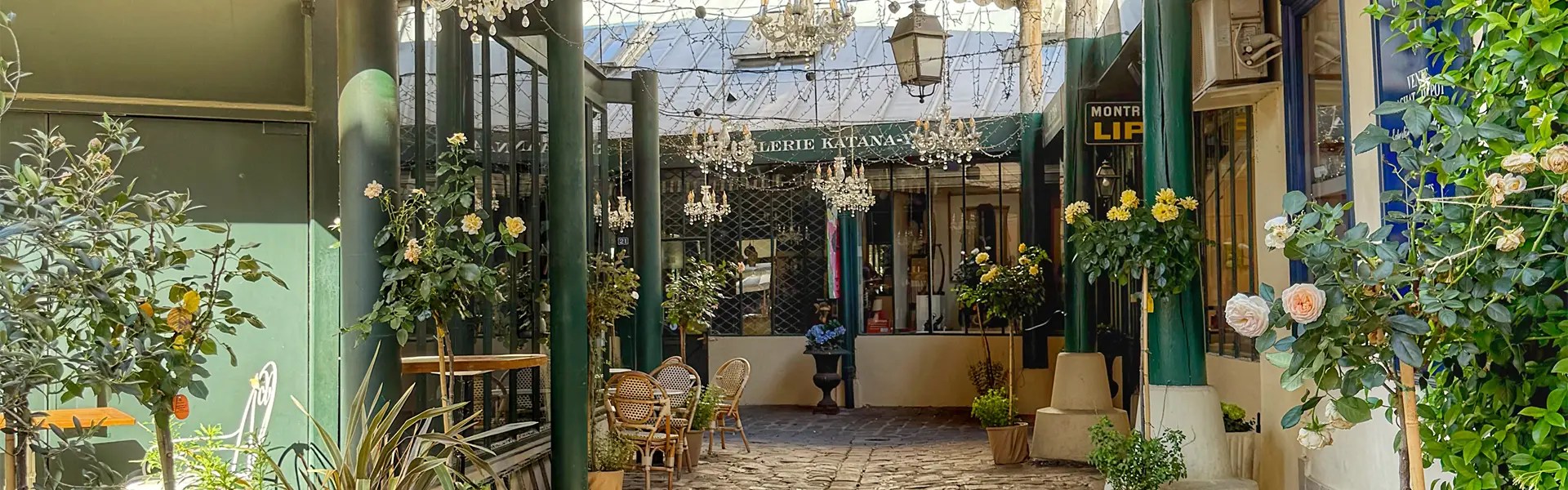
But then, as so often happens in France, wandering off the beaten track revealed a whole other level to this chic town – secret courtyards, cobbled alleys, historic districts, and the enduring legacy of royal occupation.
History on every corner
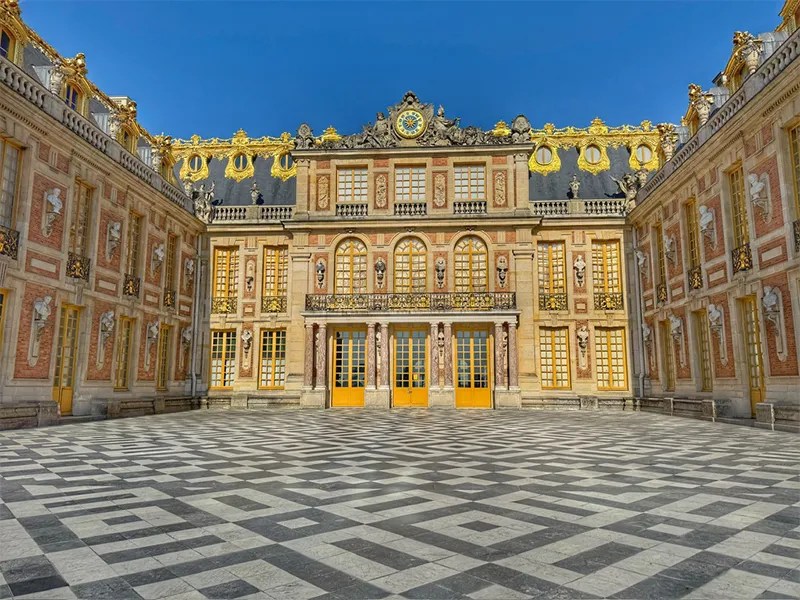
Versailles is a ‘new town’, albeit one that is several centuries old. In 1624, King Louis XIII built a hunting lodge, “nothing much to be proud of,” wrote a courtier, in what was then a small village surrounded by forests, vineyards, and meadows, not far from the main royal residence in Saint-Germain-en-Laye (see page 108). The hunting lodge became a small château, and when Louis XIII was succeeded by his son, Louis XIV, he became so fond of it that in 1661, he began embellishing the château and then transforming it into a palace that would leave the world in awe.
But his grand ambitions extended way beyond the palace. Louis XIV turned his attention to his surroundings and ordered the construction of a town. He appointed the most brilliant minds of the day to run the innovative urban planning project – the landscape gardener André Le Nôtre, who brought symmetry to the layout of the streets, as well as Louis Le Vau and Jules Hardouin-Mansart, the chief architects of the palace.
Roads emanate from the Palace like rays of the sun. To one side is the Notre Dame district, the “right bank” – built during the reign of Louis XIV. It’s mirrored on the other side by the Saint-Louis district – the “left bank,” which was further developed during the reign of Louis XIV’s successor, Louis XV. The Avenue de Paris bisects it, the widest avenue in France, with the palace in the middle.
The streets of the two districts are lined with perfectly preserved buildings from the glory days of Versailles, including official residences serving the king and supporting the administration of the kingdom, and private mansions that belonged to ministers, key staff and nobility, and even quaint houses for the “lesser” members of society.
The first modern city in the world

Versailles is considered to be the first modern city in the world – wide streets let the daylight in and were lit at night by candles in lanterns, and drinking water was made available for all. Versailles inspired the design of many great cities, including Washington, Baltimore, Philadelphia and St Petersburg.
Building the new town was not an easy task; there were no quarries nearby for rock, and no river to provide water for building. Much of the area was marshland. But Louis’ will was absolute, and despite whispers that it was a crazy project, construction began properly in the 1670s in the Notre Dame district. In those days, a town had two essentials: a church and a market – to feed the souls and the stomachs of the people. When the Saint-Louis district was developed, it too had a grand church and a market.
Louis XIV commanded that Mansart design a ‘show home’, and nobles were not to deviate from the style (though in the 18th century, rules were relaxed to allow an expansion from two to three floors), harmony was everything. Astonishingly, two of the homes remain, and the one at 11 rue Carnot, with its red brick, slate roof, and white stone, is typical of the Versailles style.

But you’ll also spot buildings that are not quite what they seem. Red bricks were expensive, so to fulfil the king’s wishes for uniformity, some people painted white stone red and then scraped the brick lines out. If you pop to Rue du Peintre Lebrun, where you’ll find the vast Chateau d’Eau which housed an indoor reservoir for the palace together with workshops for fountaineers, you’ll clearly spot buildings with fake bricks (and fake windows)!
You can’t help but be impressed by the size of a building known as Le Grand Commun, dedicated to catering for the court (there were separate kitchens within the Palace for the preparation of the royal family’s meals for security reasons). Up to 2000 people worked there – plus it provided accommodation for workers, soldiers and even nobles.
Another enormous building housed postal services and workers – you’ll spot the gilded ‘Des Postes’ sign above the door. It was an important building, Versailles ran like clockwork, and the post was delivered to ministers up to three times per day. For the first time, offices were explicitly built for conducting work – previously, business was carried out from home. Everything in Versailles was on a grand scale. As you explore, it’s extraordinary to see just how much remains perfectly preserved and still in use as offices, shops, accommodation and cultural spaces.
The majestic stables of Versailles

The Petite Écurie, Small Stables, were where carriage horses were kept, as well as home to page boys, footmen, blacksmiths and saddlers. Now this enormous building houses various institutions and one of the finest sculpture storehouses in the world.

The Grande Écurie, Great stables, were built to accommodate the King’s hunting horses and are now home to the Académie Équestre de Versailles where equestrian ballet shows take place. You can also take a backstage tour and meet the horses, and visit the Gallery of Coaches, an extraordinary collection of carriages, sedan chairs and sleds that belonged to the royal family.
Both stables are palatial elegant buildings – the horses certainly enjoyed better accommodation than many of the King’s subjects. The Queen’s Stables (in use until Marie-Antoinette’s day) is now the Court of Appeal.
The King’s Vegetable Garden

The King’s Potager, a vegetable garden the size of a small village, provided for the court. This was no ordinary garden – ingenious experimentation by French gardening genius Jean-Baptiste La Quintinie meant that coffee and banana plants could be grown, lettuces were ready to eat in January, and strawberries were ripe in March. It’s still a working garden, run by a horticultural school whose students offer tours at the weekends (en.versailles-tourisme.com/kings-kitchen-garden).
Salle du jeu de Paume

The extraordinary, free-to-visit Salle du jeu de Paume, a court where the king would play a game considered the ancestor of tennis, gave me goosebumps just being there. Built in 1686, it is considered the founding site of French democracy, as it was here that in 1789 the spark that lit the French Revolution flickered into life when the Third Estate, a group of commoners appointed to represent the people, (alongside representatives of the nobles and the clergy), swore an oath to change the constitution of the Kingdom and created the National Assembly. The walls of this long room are lined with the names of those who signed the oath, including Guillotin and Robespierre.
Markets, cathedrals and ‘tiny houses’

Just a few steps away is the Cathédrale Saint-Louis, a baroque beauty designed by the grandson of Jules Hardouin-Mansart. I visited in the evening, and the sunlight filtered through the windows in golden shafts as the choir practised, causing me to lose track of time. A market is held in the square in front of the cathedral.
Take a few steps to the crossroads of rue Royale and rue d’Anjou to discover a charming hidden part of Versailles, Carrés Saint Louis, where small huts were built, meant to host a market in the 1700s. They were converted into possibly the first ‘tiny houses’ within 20 years, and these listed historic monuments are still lived in.
On the other side of town, in the Notre Dame district, the church of Notre-Dame is equally impressive. Close to the fabulous market of Notre-Dame, on the same site for over 400 years, is the second-largest market in France, and one of the best. If the Château is the crown of Versailles, then this market is its beating heart. Pop outside the market square to the Boulangerie Guignon – a legend with the locals for their exquisite cakes.
And don’t miss the antique quarter, which features quaint shops and cosy cafés on cobbled lanes. If you’re even vaguely curious about old keys, art deco brooches, or seventeenth-century soup tureens, you’ll lose hours here.
Musée Lambinet

A stone’s throw away, the uncrowded Musée Lambinet is an 18th-century townhouse-turned-museum that feels more like stepping into a collector’s attic than a formal gallery. Dedicated to the art and history of Versailles and the French Revolution, this exquisite time capsule mansion houses a collection of paintings, antique furniture (including a rare harp thought to be owned by Louis XV’s daughter, which is played twice a month for a free concert), curious little objets d’art including an extraordinary set of painted buttons, and even a lovingly recreated apartment from the 1700s.

And one last thing. You can’t fail to spot the street art wherever you go in Versailles. The city has two professional schools of painting and décor, which specialise in training students for theatre and TV. The Mayor encouraged them to decorate the city’s urban infrastructure, such as utility provider cabinets (electric, water, etc.). There are more than 300 of these beautifully painted boxes, which suit the image of Versailles and its legacy of art de vivre, featuring scenes of ballets, fables, and history.
So next time you find yourself standing beneath the glittering ceilings of the palace of Versailles, don’t forget to turn away from the gold and discover the town that grew in the palace’s shadow.
Get tickets to visit the palace and museums, book a guided tour, and find out more about what to see and do in Versailles: en.versailles-tourisme.com
Where to stay
Hotel Les Lumieres 5* – The former home of Colbert, Louis XIV’s famous minister, is now a spectacular hotel overlooking the Palace of Versailles. It’s a very welcoming hotel, the staff are lovely and make you feel as if nothing is too much trouble. There’s a Pierre Hermé macaron shop on the ground floor, and I could imagine Marie Antoinette would have loved nipping out daily for her sugar fix here! There’s a lovely shady courtyard, or tables on the square in front of the palace, which are great for aperitifs and snacks (the Croque Truffe is delicious!).
Hotel Waldorf Astoria Trianon Palace 5* – Purpose-built in the early 1900s, this luxury hotel, reflecting the majestic style of Versailles, overlooks the gardens of Versailles and boasts a country house feel in a tranquil location. A long list of illustrious guests have stayed here, from Sarah Bernhardt and Marlene Dietrich to John D Rockefeller and Queen Elizabeth II. It was here in 1919 that Georges Clemenceau, Prime Minister of France, dictated the conditions of the Treaty of Versailles, which was signed a few days later at the Palace of Versailles. Gordon Ramsay has a restaurant here, and the terraced gardens are lovely.
Where to enjoy a glass of champagne: Le Grand Contrôle, built in 1681 inside the Estate of Versailles by Jules Hardouin-Mansart to house the royal Finance Minister, is now a 5-star hotel. A night here will set you back a king’s ransom, but non-residents can access the bar and admire the glorious reception areas, where staff wear 17th-century style costumes.
All this exploring is bound to make you peckish and there are so many restaurants to choose from you’re spoiled for choice, but I particularly like Chapeau (7 rue Hoche), great food, a classic French menu, very near the palace, and the oldest restaurant in Versailles.

How to go to Versailles: There are 3 stations in Versailles served by a range of trains/metro from Paris. If you take the RER Train line C to Versailles Rive Gauche station (the nearest to the Palace). look out for the carriages decked out in Versailles’s gilded baroque style!
Janine Marsh is the author of several best-selling books about France. Find all books on her website janinemarsh.com
Want more France?
Discover more fabulous destinations in France with our free magazine The Good Life France
Love France? Have a listen to our podcast – everything you want to know about France and more!
All rights reserved. This article may not be published, broadcast, rewritten (including translated) or redistributed without written permission.