https://sputnikglobe.com/20251213/lebanon-warned-of-imminent-israeli-attack—foreign-minister-1123287542.html
Lebanon Warned of Imminent Israeli Attack — Foreign Minister
Lebanon Warned of Imminent Israeli Attack — Foreign Minister
Sputnik International
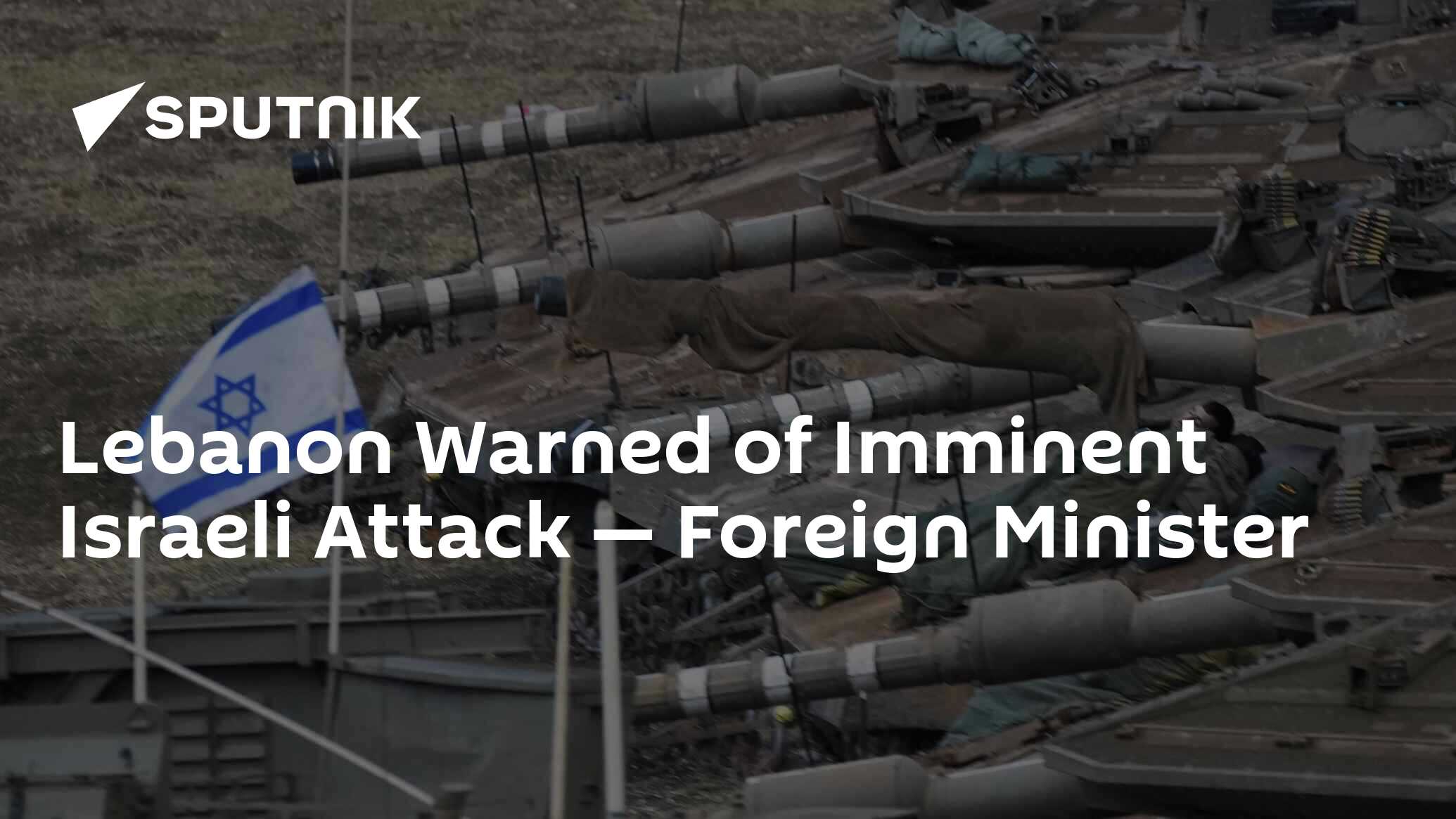
Lebanese authorities have received warnings, via closed diplomatic channels, of Israel’s preparation for large-scale military operation, Lebanese Foreign Minister Youssef Rajji said on Friday.
2025-12-13T03:58+0000
2025-12-13T03:58+0000
2025-12-13T04:46+0000
world
middle east
lebanon
israel
beirut
hezbollah
sputnik
https://cdn1.img.sputnikglobe.com/img/07e8/0b/19/1120994356_0:160:3072:1888_1920x0_80_0_0_daafcc93fbc64cb42abb2ee62fcf7503.jpg.webp
Earlier in the day, a Lebanese military source told Sputnik that Israeli warplanes attacked several areas in southern and eastern Lebanon, including Jarmaq, Jbaa, Barij, Rihan, Ansar-Zrarieh, Tebnine, Zelaya and the Wadi-Humein and Roumine. The Israeli army claimed to have struck several targets in Lebanon, including a training facility used by the Radwan special forces unit, which is part of Lebanese movement Hezbollah. “The intelligence received in Beirut regarding Israel’s intention to launch a major military operation places the country at a perilous juncture. The threats have gone beyond public statements and are now arriving through various diplomatic channels, including from Western envoys,” Rajji said in an interview with Al Jazeera. The minister emphasized that the immediate objective of Lebanon’s diplomatic efforts is to prevent the situation from sliding into military escalation. Rajji added that that the government operates under the assumption that an Israeli strike may be unavoidable, particularly given Israel’s persistent stance of treating the negotiation track and the escalation track as entirely separate processes. Rajji further stated that, despite ongoing Israeli attacks, the Lebanese armed forces plan to announce by year-end the completion of their mission to restrict the presence of armed groups, other than the army and UN forces, to areas south of the Litani River, in line with the approved plan. However, Rajji noted that, judging from Western signals, the expectations now extend beyond the south of the Litani and include areas north of the river. Commenting on the inclusion of diplomats in the negotiation process with Israel, Rajji described the current track as unconventional and explained that Lebanon seeks, through it, to restore the 1949 Armistice Agreement. He clarified that a peace treaty is not currently on the agenda; instead, priorities include halting the attacks, securing Israel’s withdrawal from occupied territories, and achieving the release of detainees. Rajji asserted that Hezbollah’s arsenal has failed to protect Lebanon, Gaza, or Jerusalem and has, in fact, invited Israeli aggression upon Lebanon. On December 4, Axios reported that diplomats from Lebanon and Israel discussed economic ties, including the reconstruction of war-damaged border areas, during their first direct talks in more than three decades. The talks took place in the southern Lebanese municipality of Naqoura on the sidelines of a monthly meeting of the US-led ceasefire monitoring committee. The committee, also known as the “mechanism,” is a format that brings together Lebanon, Israel and the United Nations Interim Force in Lebanon (UNIFIL) under the US-French auspices. The goal of the mechanism is to monitor the implementation of the agreement on cessation of hostilities. Lebanon has repeatedly accused Israel of systematically violating its sovereignty, despite the November 2024 ceasefire deal. The Israeli military maintains a presence at five strategic points in southern Lebanon, including the northern part of the village of Ghajar, which the Lebanese authorities consider to be a continuing occupation and a violation of UN Security Council Resolution 1701. The Israeli army claims that the strikes are targeting the military infrastructure of Lebanese movement Hezbollah. Israel has always vowed to continue to strike Lebanon in order to eliminate the leaders of Hezbollah’s military wing and the threat posed by the Shiite movement.
https://sputnikglobe.com/20251211/israeli-tank-opened-fire-on-un-peacekeepers-in-southern-lebanon—unifil-1123273266.html
lebanon
israel
beirut
Sputnik International
feedback@sputniknews.com
+74956456601
MIA „Rossiya Segodnya“
2025
Sputnik International
feedback@sputniknews.com
+74956456601
MIA „Rossiya Segodnya“
News
en_EN
Sputnik International
feedback@sputniknews.com
+74956456601
MIA „Rossiya Segodnya“
https://cdn1.img.sputnikglobe.com/img/07e8/0b/19/1120994356_171:0:2902:2048_1920x0_80_0_0_35fe396ec6b6df9c9765770acbbab8e4.jpg.webp
Sputnik International
feedback@sputniknews.com
+74956456601
MIA „Rossiya Segodnya“
israel lebanon war warning, israeli large-scale military operation, lebanon hezbollah israel tensions, youssef rajji al jazeera interview, un security council resolution 1701 violation, us french mediation lebanon, israel southern lebanon airstrikes, radwan special forces hezbollah, lebanon diplomatic channels warning, israeli occupation ghajar village
israel lebanon war warning, israeli large-scale military operation, lebanon hezbollah israel tensions, youssef rajji al jazeera interview, un security council resolution 1701 violation, us french mediation lebanon, israel southern lebanon airstrikes, radwan special forces hezbollah, lebanon diplomatic channels warning, israeli occupation ghajar village
Lebanese authorities have received warnings, via closed diplomatic channels, of Israel’s preparation for large-scale military operation, Lebanese Foreign Minister Youssef Rajji said on Friday.
Earlier in the day, a Lebanese military source told Sputnik that Israeli warplanes attacked several areas in southern and eastern Lebanon, including Jarmaq, Jbaa, Barij, Rihan, Ansar-Zrarieh, Tebnine, Zelaya and the Wadi-Humein and Roumine. The Israeli army claimed to have struck several targets in Lebanon, including a training facility used by the Radwan special forces unit, which is part of Lebanese movement Hezbollah.
“The intelligence received in Beirut regarding Israel’s intention to launch a major military operation places the country at a perilous juncture. The threats have gone beyond public statements and are now arriving through various diplomatic channels, including from Western envoys,” Rajji said in an interview with Al Jazeera.
The minister emphasized that the immediate objective of Lebanon’s diplomatic efforts is to prevent the situation from sliding into military escalation. Rajji added that that the government operates under the assumption that an Israeli strike may be unavoidable, particularly given Israel’s persistent stance of treating the negotiation track and the escalation track as entirely separate processes.
Rajji further stated that, despite ongoing Israeli attacks, the Lebanese armed forces plan to announce by year-end the completion of their mission to restrict the presence of armed groups, other than the army and UN forces, to areas south of the Litani River, in line with the approved plan. However, Rajji noted that, judging from Western signals, the expectations now extend beyond the south of the Litani and include areas north of the river.
Commenting on the inclusion of diplomats in the negotiation process with Israel, Rajji described the current track as unconventional and explained that Lebanon seeks, through it, to restore the 1949 Armistice Agreement. He clarified that a peace treaty is not currently on the agenda; instead, priorities include halting the attacks, securing Israel’s withdrawal from occupied territories, and achieving the release of detainees.
“Talks with Israel continue through the existing mechanism, while the government simultaneously engages in an internal dialogue with Hezbollah regarding its weapons. However, according to available information, the party has so far refused to surrender its arms,” the Lebanese official added.
Rajji asserted that Hezbollah’s arsenal has failed to protect Lebanon, Gaza, or Jerusalem and has, in fact, invited Israeli aggression upon Lebanon.
On December 4, Axios reported that diplomats from Lebanon and Israel discussed economic ties, including the reconstruction of war-damaged border areas, during their first direct talks in more than three decades. The talks took place in the southern Lebanese municipality of Naqoura on the sidelines of a monthly meeting of the US-led ceasefire monitoring committee.
The committee, also known as the “mechanism,” is a format that brings together Lebanon, Israel and the United Nations Interim Force in Lebanon (UNIFIL) under the US-French auspices. The goal of the mechanism is to monitor the implementation of the agreement on cessation of hostilities.
Lebanon has repeatedly accused Israel of systematically violating its sovereignty, despite the November 2024 ceasefire deal. The Israeli military maintains a presence at five strategic points in southern Lebanon, including the northern part of the village of Ghajar, which the Lebanese authorities consider to be a continuing occupation and a violation of UN Security Council Resolution 1701.
The Israeli army claims that the strikes are targeting the military infrastructure of Lebanese movement Hezbollah. Israel has always vowed to continue to strike Lebanon in order to eliminate the leaders of Hezbollah’s military wing and the threat posed by the Shiite movement.