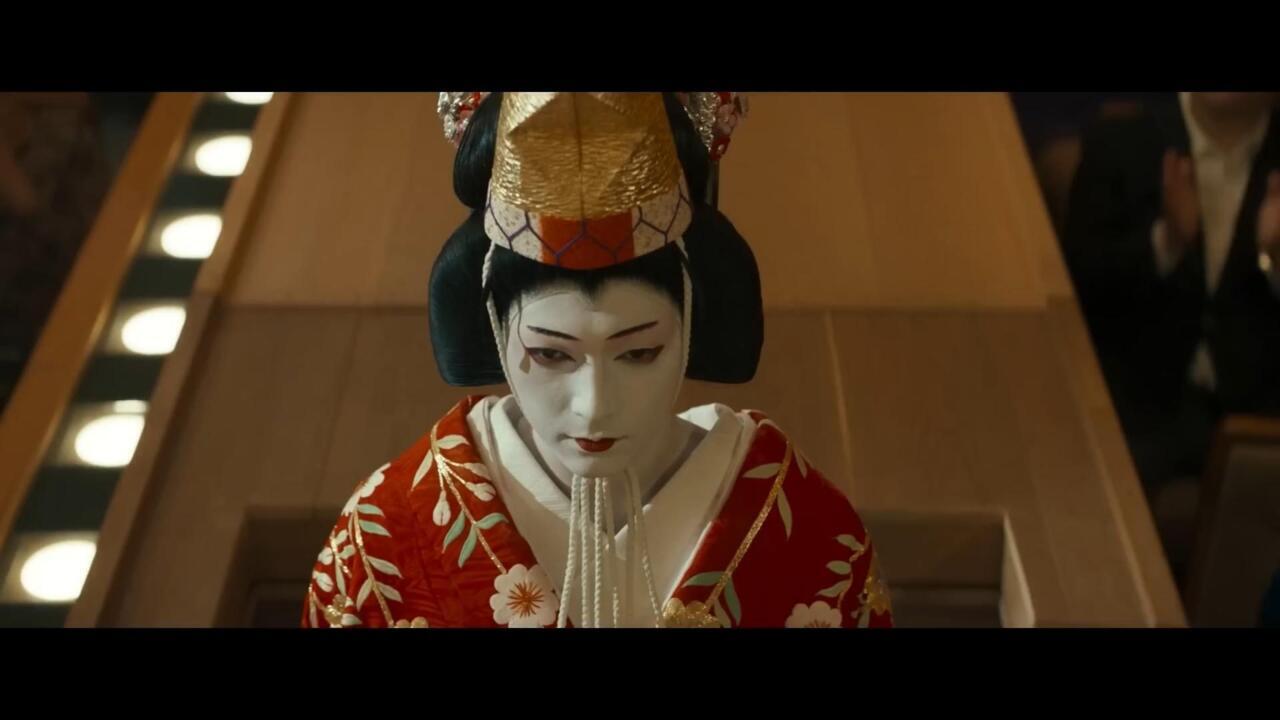
On the first day of a massive military exercise around the island of Taiwan on Monday, menacing, AI-generated scenes frame the narrative in a propaganda video released by China: An eagle transforms into an attack drone, fish become frigates and destroyers and wolves running through a forest turn into robot soldiers storming a ravaged city.
The clip, which was shared by the China Daily English-language newspaper and other platforms, presents a dehumanised, victimless vision of a Chinese invasion of Taiwan, which Beijing considers part of its sovereign territory.
“I suppose the animals represent the natural, almost instinctive, nature of the military operation, while the machines and weapons symbolise the controlled and precise aspect of the invasion. The message is that this is not a political choice, but a natural, inevitable and bloodless process,” said Simona Grano, head of research on China-Taiwan relations at the University of Zurich’s Institute of Asian and Oriental Studies.
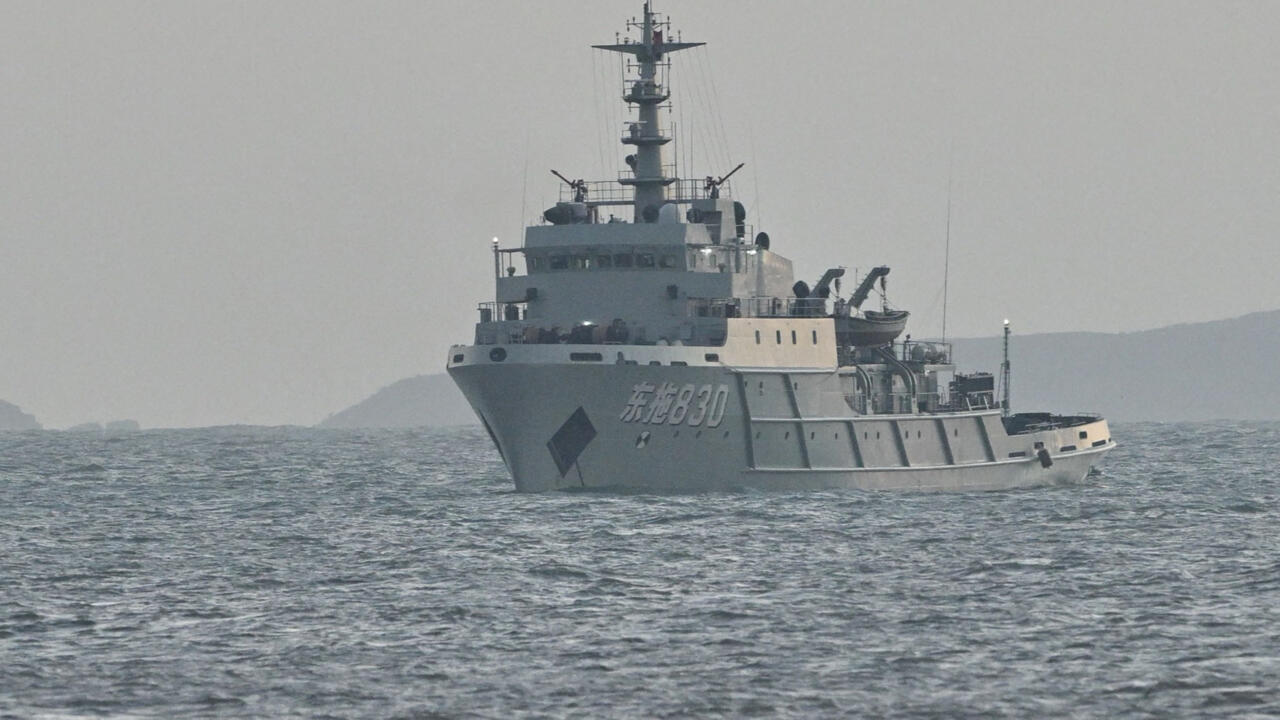
China ended the year with two days of war games, code-named “Justice Mission 2025” and involving a massive show of force with the deployment of frigates, destroyers, fighter jets, bombers, drones and missiles as well as heavy artillery.
They were accompanied by bellicose official statements, including a “stern warning” by the Chinese military to “separatist” and “external interference” forces that might be “plotting” Taiwan’s independence.
In one post on the Chinese social media site Weibo, the military’s Eastern Theatre Command, which is responsible for the Taiwan Strait, thundered that, “All those plotting independence will be annihilated upon encountering the shield of justice!”
Watch moreChinese military releases footage of drills around Taiwan
On the second day of its most extensive war games to date, China fired rockets that fell into Taiwan’s contiguous zone, according to Taiwan’s defence ministry, referring to the waters off the democratically self-governed island.
“Justice Mission 2025” also featured live-fire exercises, which have not been conducted since April.
“These manoeuvres are all the more significant because they are a joint operation involving land, naval, air and rocket forces,” noted Jonathan Sullivan, a China specialist at the University of Nottingham. But overall, “the Chinese military is not demonstrating anything it has not demonstrated before”, he said.
Beijing has stepped up its military drills since the summer of 2022, when Nancy Pelosi, then speaker of the US House of Representatives, visited Taiwan, an act Beijing viewed as a provocation.
Since then, the Chinese military has been keen to demonstrate “its ability to quickly organise a complete air and sea blockade of the island in preparation for a [land] invasion”, explained Zeno Leoni, a specialist in Chinese security issues at King’s College London.
Grano notes that over the past few years, “the Chinese armed forces are moving a little closer to Taiwan’s territorial waters, which is in line with Beijing’s gradual strangulation tactic”.
‘External interferences’ irk China
Beyond the impressive military mobilisation, the latest exercises are significant because they come at a crucial moment for Chinese President Xi Jinping. “The geopolitical context has changed a lot since the last exercises nine months ago,” noted Grano.
“Relations between China and the United States, which were particularly poor in April due to the tariff war, improved slightly after the meeting between Xi Jinping and Donald Trump at the Asia-Pacific Economic Cooperation (APEC) summit at the end of October,” Sullivan said.
The easing of ties after the Trump-Xi meeting didn’t last very long. Earlier this month, the Trump administration announced a huge arms sale worth around $11 billion to Taiwan, which includes advanced rocket-launchers, self-propelled howitzers and a variety of missiles. It was the second package of arms sales to Taipei since Trump returned to the White House in January.
The Chinese authorities “felt betrayed by Washington’s approval of one of the largest arms sales to Taiwan last week”, Sullivan explained.
Beijing felt compelled to set the record straight and reiterate its determination to eventually integrate Taiwan into its territory.
For moreUS arms package to Taiwan seen as a ‘move to use Taiwan to contain China’
The US was not the only major player to offend Chinese nationalist sensibilities in recent weeks. Beijing also took issue with Japanese Prime Minister Sanae Takaichi’s statement in November that any conflict in Taiwan would be a matter of national security for Japan.
“China perceived this statement as a threat of Japanese intervention on Taiwan’s side in the event of a conflict, which it considers unacceptable,” said Leoni. “It is true that, given its proximity to the Japanese islands, the fate of this territory is important to Japan. But in the current context, Sanae Takaichi’s statements may appear diplomatically clumsy,” he added.
For Beijing, the Japanese leader’s statement along with the US arms sales announcement was viewed as “external interferences”, representing “a setback for the Chinese diplomatic narrative, which insists on the internal nature of the Taiwan issue”, Grano explained.
A new military commander
But China’s latest show of force near Taiwanese ports is not just a signal to foreign powers tempted to strongly support Taipei. It is also a way of hitting Taiwan where it hurts.
“These military exercises are intended to further weaken [Taiwan’s] President Lai Ching-te, who is already under strong internal pressure from opposition parties,” said Grano.
“He faces impeachment proceedings next May. Opposing him, the Kuomintang party has been given a boost by public opinion, which is clearly wary of Lai Ching-te’s hardline anti-China stance. This Beijing-friendly party also recently appointed a new chairwoman, Cheng Li-wun, who is more openly pro-China than her predecessor,” explained Sullivan.
“It’s a message to the Taiwanese people saying, ‘Look what’s in store for you if you continue to support someone like Lai Ching-te,’” said Grano.
Practically speaking, the Chinese army also needs to reassure itself and others. These exercises are the first major test for Yang Zhibin, who was appointed commander-in-chief of the Eastern Theatre Command in September. “It is one of the most sensitive and important positions in the Chinese army,” said Leoni.
His predecessor, Lin Xiangyang, was accused of corruption and dismissed from the army, while the political commissar for the Eastern Theatre Command, Liu Qingsong, has simply disappeared for several months. A large-scale military exercise “allows the Chinese public to see that the military command is strong and that the page has been turned on the scandals”, said Grano.
And this messaging is not just catering to domestic audiences. “The purges of military personnel have led to speculation in the West that Xi Jinping was losing control of his army,” Sullivan noted. Organising highly ambitious manoeuvres just two months after the arrival of a new commander-in-chief of the Eastern Theatre Command is Beijing’s way of saying, ‘Move along, there’s nothing to see here.’”
This is a translation of the original article in French.